If you've considered creating a website, sooner or later you've asked yourself: what is WordPress and why does everyone recommend it? The short answer is that it's a free, open-source content management system (CMS) that allows you to create and manage websites without needing to program. The long answer is much more interesting: WordPress powers around 43% of all websites in the world, from personal blogs to online stores with thousands of products, including digital newspapers, corporate portals, and course platforms. In this guide, we will see what it is exactly, how it works internally, what types of websites you can build with it, how much it really costs to maintain, and what its limitations are. By the end, you will have enough criteria to decide if it is the right platform for your project or if another alternative suits you better.
What is WordPress: definition and a bit of history
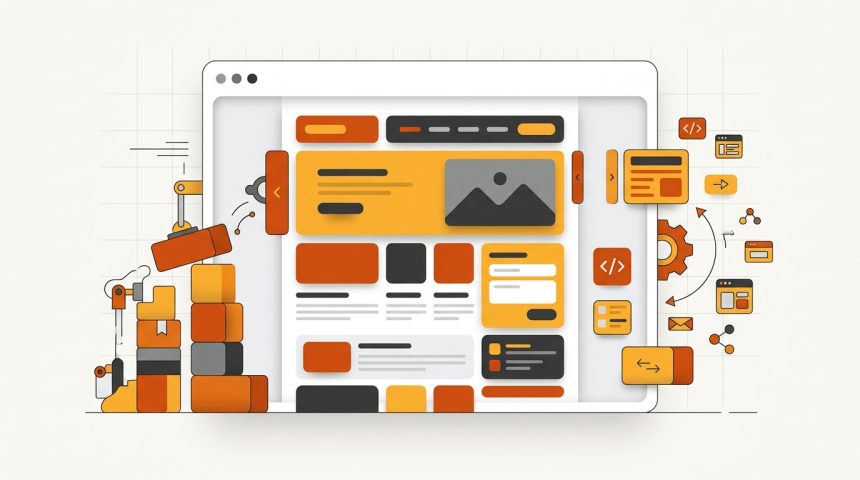
WordPress is software that is installed on a web server and provides everything needed to manage a site: an administration panel, a content publishing system, user management, themes to control the design, and plugins to extend functionalities. It was born in 2003 as a tool to create blogs, from a previous project called b2/cafelog, by Matt Mullenweg and Mike Little.
Con los años dejó de ser “un programa para blogs” y se convirtió en un CMS completo. Hoy el proyecto lo mantiene una comunidad enorme de desarrolladores voluntarios coordinada por la Fundación WordPress, y su código se distribuye bajo licencia GPL: puedes descargarlo, usarlo, modificarlo y redistribuirlo sin pagar nada. La versión oficial en español, con documentación y foros de soporte, está disponible en es.wordpress.org.
It's worth clarifying a very common confusion from the start: WordPress.org and WordPress.com are not the same. The first is the free software you install on your own hosting; the second is a commercial service from the company Automattic that hosts websites made with that software in exchange for a subscription. In this guide, we are talking about the free software, which is what most professionals understand by WordPress.
How WordPress works internally
You don't need to know the technical details to use it, but understanding the basic architecture will help you make better decisions. WordPress relies on four pieces:
- PHP: the programming language it is written in. Every time someone visits your website, the server executes PHP code that generates the page.
- A MySQL or MariaDB database: there your posts, pages, comments, users and settings are saved. The content does not live in loose files, but in tables.
- The themes: templates that define the visual appearance of the site. You can change themes without losing content, because design and content are separate.
- The plugins: extensions that add specific functions, from a contact form to a complete online store.
When you publish a post from the editor, WordPress saves it in the database. When a visitor requests that URL, the system retrieves the content, combines it with the active theme's template, and returns the final HTML to the browser. This separation between content, design, and functionality is the key to its flexibility.
The administration panel
All management is done from a panel that you access at the address tudominio.com/wp-admin. From there you write content with the block editor, upload images to the media library, install themes and plugins, moderate comments and control users. There's no need to touch code or access the server for day-to-day tasks.
What WordPress is for: types of websites you can create
La pregunta correcta casi nunca es “¿qué es WordPress?” sino “¿me sirve para lo que quiero montar?”. La respuesta es afirmativa en la gran mayoría de casos. Estos son los usos más frecuentes:
- Blogs and digital magazines. It's its natural territory. Categories, tags, comments, subscriptions and post scheduling come standard.
- Corporate websites. Company pages with sections for services, team and contact. It is probably the most common use among SMEs.
- Online stores. With the WooCommerce plugin, WordPress becomes a complete e-commerce platform, with catalog, cart, payment gateways and order management.
- Portfolios. Photographers, designers and agencies use it to showcase their work with galleries and projects.
- Course platforms. Plugins like LearnDash or Tutor LMS add lessons, quizzes and student areas.
- Booking websites. Restaurants, clinics and hotels manage appointments and reservations with specialized plugins.
- Forums and communities. With bbPress or BuddyPress you can set up discussion forums and user profiles.
- Media and newspapers. Many digital newspapers run on WordPress thanks to its editorial system of roles, drafts and revisions.
When is it not the best option? If you need a custom web application with very specific business logic (billing software, a complex social network, a real-time app), a custom development or a programming framework will fit better. For content, catalogs and presence websites, WordPress is hard to beat.
Real advantages of using WordPress
Beyond the usual enthusiasm, these are the specific advantages that explain its market share:
- It is free and open source. You don't pay a license. Your only mandatory expenses are the domain and hosting.
- Does not require programming knowledge. The block editor allows visual page layout, and themes solve the general design.
- Gigantic ecosystem. More than 59,000 free plugins in the official repository and thousands of themes. Almost any function you can imagine is already solved.
- Good starting point for SEO. It generates clean URLs, allows control over titles and structures, and plugins like Yoast or Rank Math facilitate optimization.
- You own your website. The content is in your database, on your hosting. You can migrate to another provider whenever you want, something impossible on closed platforms like Wix or Squarespace.
- Community and documentation. Any problem you have, someone has had it before. There are tutorials, forums and specialized professionals in abundance.
- Scalability. The same installation that starts with ten daily visits can grow to hundreds of thousands with good hosting and a caching layer.
Limitations and aspects to watch out for
No tool is perfect, and it's good to know the weak points before committing:
- Continuous maintenance. WordPress, themes and plugins constantly publish updates. Ignoring them is the primary cause of hacked websites. Set aside some time each month to update and review.
- Security. Precisely because it is so popular, it is the favorite target of automated attacks. With good practices (strong passwords, updated plugins, a security plugin) the risk is greatly reduced, but the responsibility is yours. If you want to delve deeper, we have a guide with 7 tricks to strengthen your WordPress security.
- Variable performance. A clean installation is fast; one loaded with poorly chosen plugins on cheap hosting can be exasperating. Speed depends on your decisions.
- Initial learning curve. Although you don't have to program, you do need to familiarize yourself with concepts like themes, plugins, permalinks, or backups. Allow a few weeks for adaptation.
- Excess of options. Choosing among thousands of themes and plugins is overwhelming at first. The solution is to start small: a solid theme and five or six essential plugins.
How much does a WordPress website really cost?
The software is free, but a website in production has costs. These are the usual ranges in Spain:
| Concept | Approximate annual cost | Mandatory? |
|---|---|---|
| Domain (.com or .es) | €10 – 20 | Yes |
| Shared hosting | €50 – 120 | Yes |
| Premium theme | €0 – 60 | No |
| Paid plugins | €0 – 200 | No |
| Professional maintenance | €0 – 600 | No |
That is, a functional website can cost you between 60 and 140 euros per year if you manage it yourself with free resources. From there, each improvement (a premium theme, a booking plugin, a maintenance service) adds up according to your needs. The choice of hosting is the decision with the most impact on the result: in this guide on what hosting you need for WordPress we explain how to choose correctly according to the type of project.
How to start with WordPress in 5 steps
If after all the above you are clear that WordPress fits your project, the path to get started is this:
- Register a domain. Short, easy to remember, and, if possible, with your brand. The .com or .es extension works well for projects in Spain.
- Hire a hosting. Look for one with one-click WordPress installation, included SSL certificate, automatic backups, and Spanish support.
- Install WordPress. Most hostings do it for you in less than five minutes. If you prefer the manual process or want to understand each step, you have the complete details in our definitive guide to installing WordPress.
- Choose a theme and configure the basics. Título del sitio, zona horaria, estructura de enlaces permanentes (en Ajustes → Enlaces permanentes, elige “Nombre de la entrada”) y una página de inicio.
- Install the essential plugins. One for SEO, one for security, one for backups, one for caching, and one for forms. With these five, you cover 90% of initial needs; in this list of essential WordPress plugins for beginners you have specific recommendations.
An additional tip for getting started: before launching, calmly review the texts and their length. Free tools like our word and character counter help you control the length of titles, descriptions, and content without installing anything.
WordPress vs. other alternatives
To make an informed decision, it's good to know what competitors offer:
- Wix and Squarespace: very comfortable visual editors and everything included in a subscription (from about €10-30 per month). In return, less flexibility, worse scalability, and your website lives on their platform: if you leave, you don't take it with you.
- Shopify: excellent for pure online stores, with very polished management, but with monthly fees, sales commissions on certain gateways, and limited capacity for content and blogs.
- Custom Development: maximum freedom and performance, but with costs of thousands of euros and total dependence on the developer for any change.
The practical rule: if your project revolves around content, services, or a catalog, and you want to own your website paying the minimum, WordPress is the most balanced option. If you only need an online business card and don't want to deal with maintenance, a builder like Wix might suffice. If your business is exclusively selling online at a large scale, compare with Shopify before deciding.
Frequently Asked Questions
Is WordPress really free?
The software itself, yes, 100%, including all its functions. What you pay for is the infrastructure where it runs: the domain (about €10-20 per year) and hosting (from about €4-10 per month). Premium themes and plugins are optional; there are quality free alternatives for almost everything.
Do I need to know how to program to use WordPress?
No. Installation, design with themes, and content publishing are done from the administration panel without writing code. Knowing a little HTML and CSS helps to make fine adjustments, but it's not a requirement. Programming is only necessary if you want to develop your own themes or plugins.
What is the difference between WordPress.org and WordPress.com?
WordPress.org is the free software you install on your own hosting, with total control. WordPress.com is a paid service that hosts your website for you, with limitations depending on the plan you subscribe to. For serious projects, the self-hosted (.org) version is usually recommended for flexibility and cost.
Is WordPress secure?
The core of the system is secure and receives patches quickly. Problems almost always come from outdated plugins, weak passwords, or deficient hosting. By keeping everything updated, using strong passwords, and a security plugin, the level of protection is more than adequate for the vast majority of projects.
Conclusion
WordPress is a free, flexible content management system backed by the largest community in the sector, capable of shaping almost any type of website: blogs, corporate websites, online stores, portfolios, or course platforms. Its advantages (full ownership, plugin ecosystem, low costs) clearly outweigh its demands (periodic maintenance and a manageable initial learning curve). If your project needs to grow over time and you don't want to be tied to a closed platform, it's the most sensible option on the market. The next logical step is to choose good hosting, install the system, and build your first page: everything you need for that journey is in the guides linked throughout this article.